 Known to be toxic - Toxic to mammals if ingested.
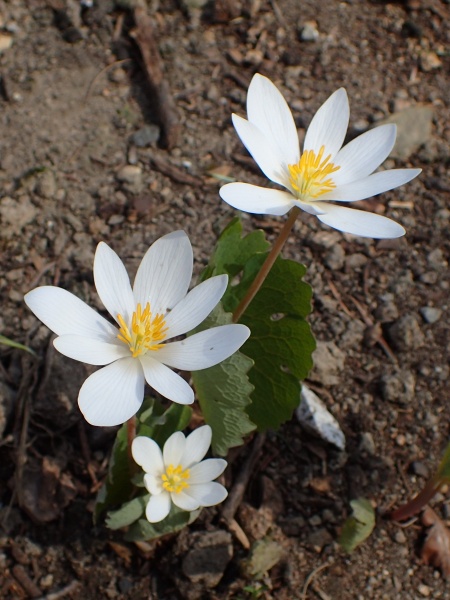
Source: enraiz
Plant Names

Sanguinaria canadensis
Bloodroot
Sanguinaire du Canada
Synonyms
puccoon-root
red puccoon
sang-dragon
sanguinaire
Plant Characteristics
Bloom Colour: White
Bloom Period: Apr - May
Max Height: 0.5 feet
Max Width: 0.8 feet (spreads by rhizome)
Light Condition:
 Less than 2 or 3 hours of direct sun a day
Soil conditions:
Less than 2 or 3 hours of direct sun a day
Soil conditions:
 Tolerates medium soil condition
Less than 2 or 3 hours of direct sun a day
Tolerates medium soil condition
Lifespan:
Perennial
plants that will come back year after year
(Spring Ephemeral)
Gardener Experience:
 Spreads by rhizome
 Self-seeding
Spreads by rhizome
Self-seeding
Landscape Uses:
 Suitable for rain gardens
 Suitable for woodland gardens
Suitable for rain gardens
Suitable for woodland gardens
Ecological Benefits:
No ecological benefits information available.
Tolerates:
 Deer resistant
 Rabbit resistant
 Tolerates limestone conditions
 Tolerates juglone conditions
 Tolerates transplantation
Deer resistant
Rabbit resistant
Tolerates limestone conditions
Tolerates juglone conditions
Tolerates transplantation
Special Features and Considerations:
Seed and plant distribution status
No seeds available for this plant.
We are not accepting seeds for this plant at the moment.
Plant Location
Native to Ottawa region: Yes
Distribution according to VASCAN
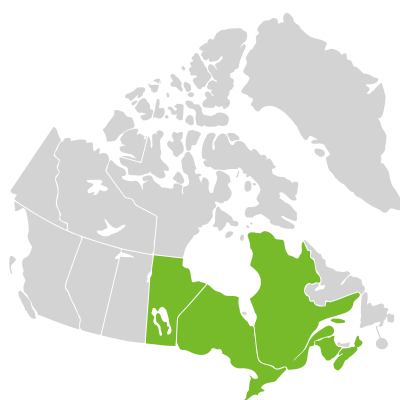
Ephemeral
Native
Introduced
Excluded
Extirpated
Doubtful
Absent
 Canadensis

Thrives in Ecozones
- Boreal Plains
- Mixed Wood Plains
Ecological Benefits
Butterflies Supported by Sanguinaria canadensis
No butterfly data available for this plant.
Specialized Bees Supported by Sanguinaria canadensis
No bee data available for this plant.
Complementary Plants
- No complementary plants found.
Substitute For Non-Native Plants
- Plantago (Non-Native Plantain)
- Lamium (Dead nettle)
- Ajuga reptans (Bugleweed)
- Lysimachia nummularia (Creeping Jenny)
- Iridaceae (Crocus)
- Scilla siberica (Siberian Squill)
- Salvia (Non-Native Sage)
- Hyacinthus (Non-Native Hyacynth)
- Petunia (Non-Native Petunias)
- Myosotis sylvatica (Forget-me-not)
- Phlox subulata (Moss Phlox)
Sowing Information
Download Seed Envelope Labels (PDF)
- Sowing depth: Sow just below surface
- Sow anytime
- Stratification duration: 2 years
- Self-seeding
- Double dormancy required
- Notes: Sow promptly. Can be kept in fridge up to 2 months.
Harvesting and Seed Sharing
- Harvest start month: June
- Harvesting indicator:
- Pods are open
- Harvesting:
- Open the pod, remove seeds
- Seed viability test:
- No test needed before donating
- Packaging measure: 1 rounded 1/8 teaspoon
- Seed storage:
- Keep moisten and cool, in a ziploc bag, in the fridge, with the seeds in soil, paper towel or coffee filter, until donation
- Cultivar: Yes, do not donate unless you know source, and there are no known cultivars in your garden or at proximity
- Harvesting video: Watch here
Toxicity Notes
Toxic to mammals if ingested.